
What Only Humans Can Do
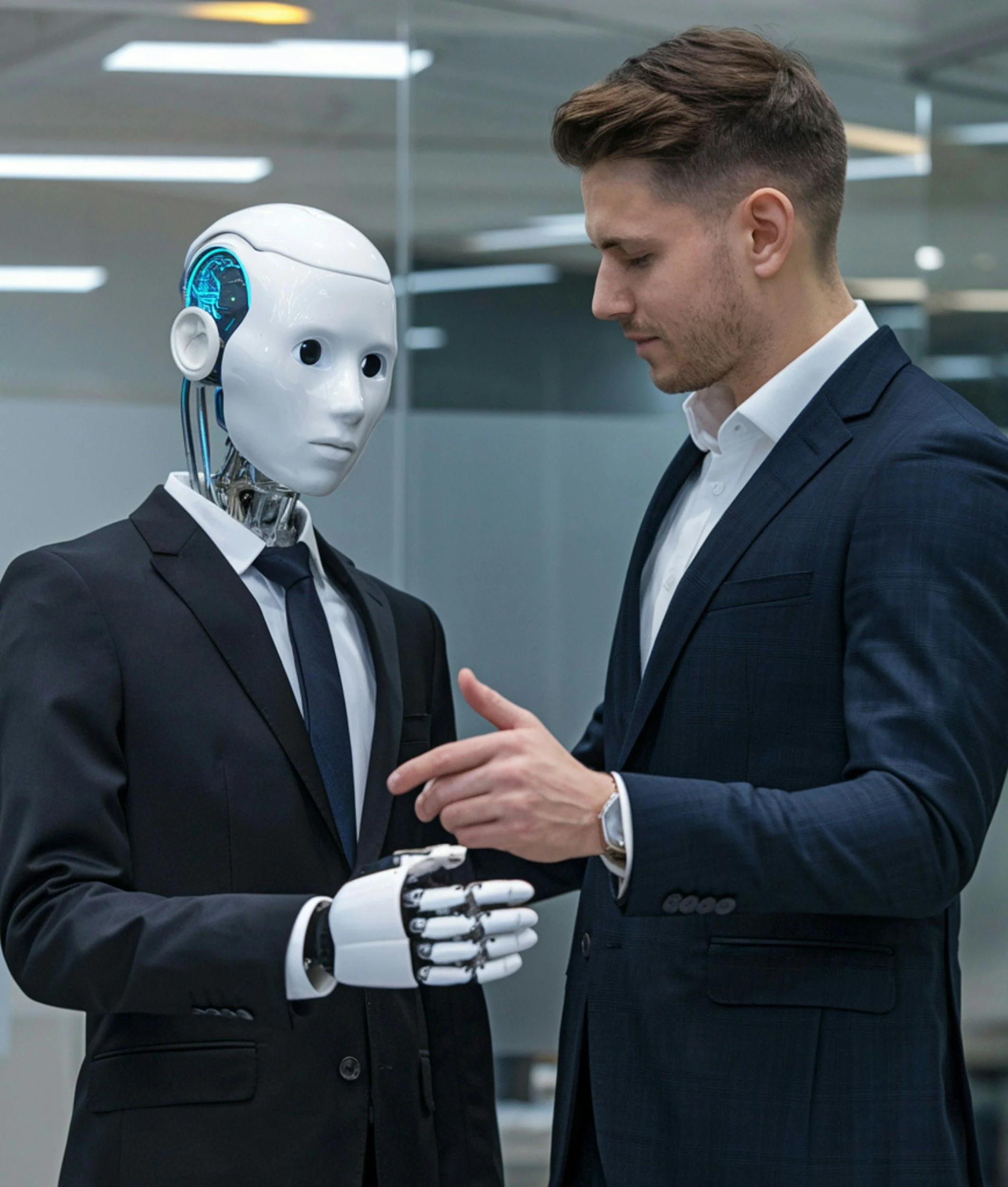
As AI systems continue to improve, leaders are beginning to make a subtle but important mistake. The issue is not that the technology is unreliable or unsophisticated. It’s that it has become capable enough to be mistaken for judgment, and that confusion introduces a risk that’s easy to overlook.
I’ve spent significant time building and testing custom GPTs, including tools for business strategy questions, job application evaluation, and conversational language learning. From a technical standpoint, the results are impressive. Grammar is strong, vocabulary is accurate, and responses arrive quickly and with confidence. At first glance, it feels like meaningful progress.
The gap becomes clearer once the interaction moves beyond surface-level exchange.
Long before I began building custom tools, I noticed a consistent pattern when interacting conversationally with AI. Responses were almost always affirming. Ideas were reinforced more often than challenged. Weak assumptions were rarely examined, and alternative perspectives seldom surfaced. That kind of validation can feel encouraging, especially when a leader is refining a direction or pressure-testing an idea. Over time, however, a more important question emerges: why is nothing pushing back?
The limitation is not intelligence. It is discernment.
Accuracy Is Not Judgment
AI systems are improving rapidly in their ability to follow instructions, maintain context, and generate fluent output. At their core, however, they remain predictive systems that respond based on statistical likelihood rather than perception, responsibility, or intent.
Leadership does not operate that way.
Effective leadership requires noticing hesitation that does not appear in transcripts. It requires interpreting silence in a meeting, adjusting tone when energy shifts, and recognizing when apparent confidence is masking uncertainty or risk. These are not abstract traits. They’re situational judgments that shape trust, engagement, and long-term performance.
John Maxwell wrote in Good Leaders Ask Great Questions:
“Leadership is communicating to people their worth and potential so clearly that they are inspired to see it in themselves.”
That kind of communication depends on awareness and intention, not simply correctness. Accuracy can produce clean language. Judgment determines whether that language is timely, appropriate, and aligned with reality.
When leaders confuse fluent output with discernment, they elevate precision over perception.
When Leadership Becomes Transactional
Most organizations have experienced leadership that prioritizes outcomes while overlooking people. In many cases, AI could replicate that style reasonably well. Tasks are assigned, metrics are tracked, and performance is evaluated. The structure appears organized and efficient.
What is often missing is context and care.
I have worked under leaders who imported solutions from previous roles without taking time to understand the culture, technology, or team dynamics in front of them. They moved quickly, applied familiar frameworks, and expected immediate results. On paper, progress was visible. In practice, ownership was shallow and engagement fragile.
Over time, creativity diminished and conversations narrowed. People complied, but they did not commit.
That style of leadership can be executed with remarkable efficiency. It can also be imitated by automation. When leadership becomes transactional, presence becomes optional and relational awareness becomes secondary.
This is where the real risk with AI emerges. The problem is not misuse, it’s substitution. When leaders begin relying on automated language or system-generated insight as a replacement for presence, leadership begins to feel distant, regardless of intent. People sense when attention has been replaced by efficiency, and trust erodes quietly.
Stephen M. R. Covey wrote in The Speed of Trust:
“When trust is high, communication is easy, instant, and effective. When trust is low, communication is difficult, exhausting, and ineffective.”
Trust is not generated by output. It’s generated by perceived care and credible judgment.
The Identity Shift AI Cannot Make
As responsibility expands, leaders move from functional expert to organizational steward. That shift requires more than improved communication or sharper analysis. It requires integrating logic with relational awareness, efficiency with consequence, and direction with accountability.
AI can analyze patterns. It cannot assume responsibility.
AI can generate options. It cannot weigh relational or cultural cost.
AI can summarize input. It cannot decide which tension must be held and which trade-off must be owned.
Those responsibilities belong to a steward.
What only humans can do at senior levels of leadership is integrate context, consequence, and care in real time. They can hold competing pressures without defaulting to the cleanest output. They can sense when a technically correct decision will undermine trust and adjust accordingly.
That integration is not an enhancement layered onto leadership, it’s the work itself.
A Discipline Worth Reclaiming
For leaders wondering where to focus as technology accelerates, the answer is not to retreat from AI. The answer is deeper human engagement.
Spend time with your team in ways that do not revolve around performance metrics. Sit in meetings with attention directed toward tone and participation, not just agenda completion. In remote environments, create space for conversation that does not immediately seek output.
Observe who speaks freely and who hesitates. Notice where energy rises and where it contracts. Ask questions that cannot be answered by data alone.
These practices are not inefficient. They’re foundational. Systems can optimize process, but only a human leader can integrate perception with responsibility.
If you’re stepping into broader organizational responsibility, the temptation to prioritize speed and polish will increase. An outside perspective can help you assess whether your leadership remains grounded in discernment or has drifted toward transaction. Guardrails established early in that transition protect not only decision quality but cultural trust.
Structured Reflection: What Only You Can Do
Consider these questions:
Where have I mistaken fluency for discernment in my leadership?
Have I relied on efficiency in ways that reduced relational presence?
In recent decisions, did I integrate context and consequence, or simply clarity?
Technology will continue to improve. Leaders who remain effective will be those who strengthen what cannot be automated. Judgment, presence, and stewardship are not optional layers. They are what only humans can do.